
Importance of Paediatric First Aid
As parents we always want our children to be safe. And when we leave them in the care of a nursery or school, a nanny, an au pair or a babysitter, we want to have some assurance that in case of an emergency, the person taking care of your little ones will know exactly how to react and handle the situation swiftly and safely. For this reason people working in childcare should have some form of first-aid training, and we recommend that this be in the form of a paediatric first aid training.
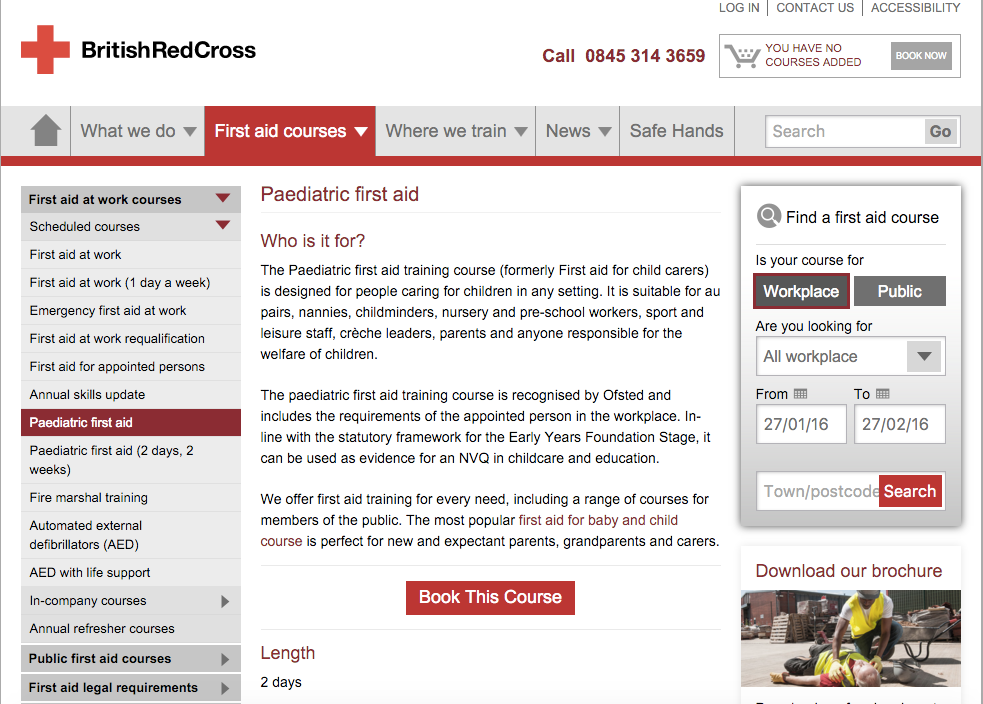
There are several types of first aid training courses depending on one’s objective. There are short courses for general public wishing to obtain minimal knowledge of dealing with common first aid situations. Organisations can also provide courses for Schools, Nurseries and Medical Professionals. Paediatric first aid course has been designed to meet the first aid training needs of child-minders and child carers.
Most of paediatric first aid training courses are recognised by Ofsted. In-line with the statutory framework for the Early Years Foundation Stage, it can be used as evidence for an NVQ (National Vocational Qualifications) in childcare and education.
Definition of a Paediatric First Aid
Paediatric first aid training would help carers to understand how to administer emergency first aid to an infant and a child with a chronic medical condition or sudden illness such as:
- sickle cell crisis
- diabetic emergencies
- asthma attack
- allergic reaction
- meningitis
- febrile convulsions
Understand how to administer first aid to someone:
- who is experiencing the effects of extreme heat and cold
- who has sustained an electric shock
- with burns or scalds
- who has been poisoned
- who has been bitten or stung
- with minor injuries, including cuts, grazes, bumps and bruises, small splinters and nose bleeds
- with conditions affecting the eyes, ears and nose
- with head and spinal injuries
- with anaphylaxis
- who is suffering from shock.
Be able to provide first aid for an infant and a child:
- who is unresponsive and breathing normally, including child and infant resuscitation
- who is unresponsive and not breathing normally
- who has a foreign body airway obstruction
- with external bleeding
- with injuries to bones, joints and muscles
There is no set minimum length of time for a first aid course. Many standard courses take 12 hours to complete. It may be possible for babysitters to undertake an intensive course in less than 12 hours, but be aware that some websites offer various forms of first-aid training, especially the free ones, that are NOT recognised as valid first-aid training programs. All training should be either approved by a local authority, Health and Safety Executive (HSE), Qualifications and Curriculum Authority (QCA), or provided by a reputable body, such as the Red Cross, St John Ambulance or St Andrew Ambulance.
People must renew their first aid certificate every three years after the date the training was completed. Carers may wish to make sure relevant people undertake refresher courses annually. By the time a certificate expires, the individual will have to undertake another full course of training to become certified.
Tags: Babysitters, Childcare, paediatric first aid, qualifications, training